For decades, performance promised stability. AI, layoffs, and shifting workplace incentives have rewritten the rules. It's time to rethink success.
We didn’t get more disciplined. We got more measured.
There was a time when knowing how you were doing required another human being.
A teacher. A coach. A doctor. A boss. A spouse who noticed you seemed tired. Even your own mirror, which, for all its flaws, required you to look at yourself before offering an opinion. Judgment used to be slow, occasional, and delivered by someone with a face.
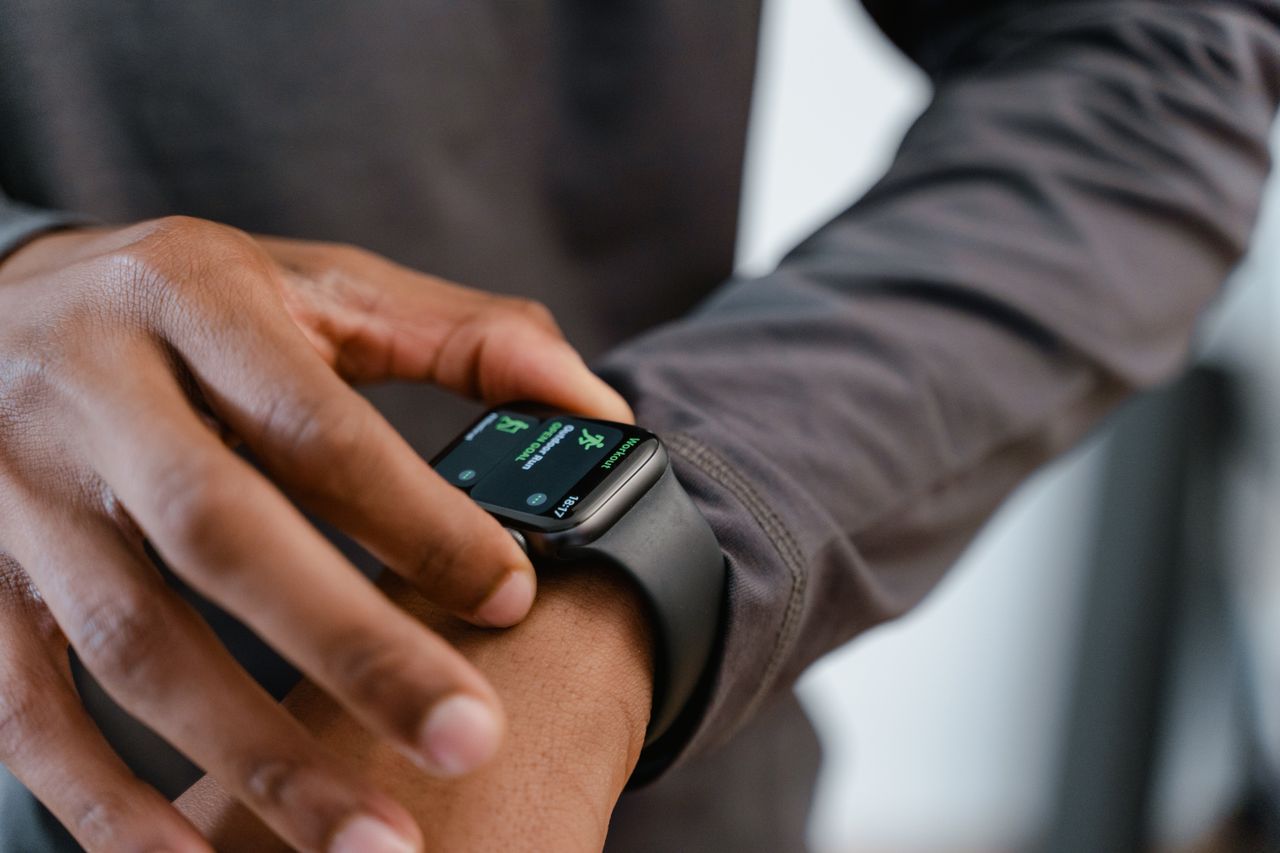
Now you wake up, and before another human being says good morning, your phone has already graded your sleep. Your watch has decided whether you recovered. Your glucose monitor has an opinion about breakfast. Your productivity app is quietly tallying whether yesterday counted. Your meditation app has a number for how calm you were. Your budgeting app has a number for how responsible you were. Your social feed has a number for how much anyone noticed you. By the time you’ve had coffee, you’ve received a dozen small verdicts about who you are, and not one of them came from a person.
That’s not a complaint about technology. Steps get counted, sleep gets tracked, and most of it is genuinely useful. What’s worth noticing is the shift underneath it.
Humans have always kept score. What’s changed is who owns the scoreboard.
For most of history, someone else held the number. Teachers owned the grades. Coaches owned the statistics. Employers owned the evaluations. Doctors owned the readings, and you found out what they meant when they told you. There was a person standing between you and your data, and that person was usually accountable to you in some way, even imperfectly. The revolution didn’t arrive as measurement. It happened when measurement stopped requiring a middleman, got small enough to fit on a wrist, and moved in with you permanently.
We’ve Always Measured Things
Measurement is one of the oldest tools civilization has for improving anything.
Farmers counted crops. Athletes kept statistics. Merchants tracked profit. Doctors measured blood pressure. None of that is new, and none of it is sinister.
But there’s a meaningful difference between measuring an activity and measuring a person. A farmer’s yield tells him something about his field, not his worth. A batting average describes a season, not a soul. Blood pressure describes your health, not your character. For most of history, metrics stayed politely in their lane, describing what you did rather than diagnosing who you were, and they showed up late enough to leave you alone in the meantime. The game finished, then someone counted. The harvest ended, then someone measured. The books were closed, then someone calculated the profit.
There was a natural pause between doing the thing and being judged for it, a gap when the activity could just be an activity for a while.
Today’s metrics have given up both boundaries at once. They don’t wait until you’re finished, and they don’t stay confined to the activity. A sleep score doesn’t just tell you how you slept; it tells you, with a little colored ring, whether you’re doing life correctly, and it tells you before you’ve even left the bed. That’s a new kind of intimacy for a number to have, and marketers noticed the opportunity before the rest of us noticed the shift.
Engagement Got an Upgrade
For decades, the marketing goal was straightforward: get someone to buy something. Run the ad, make the sale, move on to the next campaign. It worked, but it was episodic. The customer showed up, transacted, and disappeared until the next craving or coupon.
Continuous engagement is a better business model, and everyone building consumer technology in the last decade has understood this instinctively, even if they never said it in a board meeting.
“Buy our product” is a single event. “Check your score” is a habit, and habits, unlike purchases, don’t require a decision each time. They just require the person to keep showing up, which they will, because nobody wants to leave a question mark hanging over their own performance.
You can watch this play out category by category, and the escalation is worth walking through slowly, because no single step looks alarming on its own.
Fitness used to be a private matter of “I exercised” or “I didn’t.” Now it’s 10,000 steps, move rings, recovery scores, VO2 max, body battery, readiness percentages. Health has quietly stopped being something a person experiences and become something a person refreshes.
Education followed the same arc. A generation ago, report cards arrived a few times a year and told parents roughly how things were going. Now there are dashboards for attendance, assignment completion, reading minutes, and behavior points, updated continuously enough that a child’s entire day is visible in real time. Learning has become quantified in a way that would have struck earlier generations as faintly dystopian, and strikes most of us now as Tuesday.
Work, of course, got there first and went furthest. This is the same territory I cover in *Purpose Over Performance*: an entire architecture of dashboards, utilization rates, response times, and KPIs that gradually stopped being a way to evaluate work and became the primary story an organization tells about a person.
Once organizations learned to manage through dashboards, it became natural to imagine that people themselves could be reduced to dashboards. Annual reviews became performance indexes. It wasn’t long before many workers stopped saying “I had a good year” and started saying “I’m a high performer,” as though it were a personality trait rather than a snapshot of twelve months.
The FADS reader will recognize the mechanism instantly, because it’s the same one that turns cravings into purchases. Give people a number. Make it visible. Then watch them organize their behavior, and eventually their identity, around moving it.
And social life, which used to resist quantification almost by definition, surrendered completely. Followers. Views. Streaks. Reply counts. An end-of-year wrap-up that turns your listening habits into a personality profile you’re invited to share. Even friendship, somehow, now produces a number.
Perhaps the clearest evidence of how far this has spread is who’s carrying it now. This isn’t just Gen Z anymore. Not long ago, the quantified self felt like a niche obsession, mostly the province of biohacking enthusiasts and the more intense sort of marathoner. It isn’t niche anymore. Your friends’ parents, the ones who resisted smartphones, are now checking sleep scores. They know their heart-rate variability. They have opinions about their glucose curve. They’re learning new apps not because they suddenly discovered a passion for technology, but because participation in their own healthcare increasingly requires a dashboard. Technology literacy isn’t spreading because everyone fell in love with their phones.
It’s spreading because opting out now comes at a cost, and that cost keeps rising.
When the Measurement Becomes the Meaning
None of this is an argument against measurement. A sleep score is useful. A dashboard is useful. Feedback, in general, is one of the more reliable ways to get better at anything. The danger doesn’t live in the number itself. It lives in the moment the number stops describing the day and starts deciding it.
It helps to understand why the number gets that kind of authority in the first place. Human beings have always wanted reassurance that they’re making progress, and ambiguity is uncomfortable in a way that numbers simply aren’t. A sleep score feels more certain than asking yourself whether you feel rested. A follower count feels more authoritative than wondering whether the conversation actually mattered. So the question quietly changes shape. Instead of *how do I feel*, it becomes *what did my watch say*. Instead of *did I have a good day*, it becomes *what does the dashboard say*. That’s not just more measurement. It’s judgment being outsourced, one small decision at a time, from the person living the day to the device recording it.
A sleep score is useful right up until you believe it determines whether today can be a good one. A productivity dashboard is useful right up until your sense of having accomplished something evaporates the moment the numbers dip. A follower count is useful right up until it quietly becomes your best estimate of your own importance.
This is precisely the trap Purpose Over Performance spends its opening chapters describing in the context of work: performance stops being something you do and becomes who you are. The scoreboard culture just extends that same collapse into sleep, mood, friendship, and breakfast.
We built these scoreboards to measure our lives. Somewhere in the last decade, without much of a formal announcement, some of us started living for the scoreboard instead.
The Next Phase
The next phase of marketing was never really about influencing what you buy. That was just the training ground. The more durable opportunity turned out to be influencing how people evaluate themselves, one micro decision at a time.
A brand that owns your sense of “how today went” doesn’t need to sell you anything else. You’ll come back on your own, every morning, to find out.
The scoreboard isn’t going away. If anything, the next generation of tools will get better at measuring, predicting, and evaluating almost everything we do. That’s simply where the incentives point.
The more interesting question is whether we’ll remember that the score was built to describe a life, not define one.
Related Posts