For decades, performance promised stability. AI, layoffs, and shifting workplace incentives have rewritten the rules. It's time to rethink success.

Every August, a familiar ritual repeats itself across the country. Backpacks get filled with fresh notebooks. Parents post first-day-of-school photos with children squinting into the sun on a porch step, a little taller than last year. It looks like the beginning of something simple: reading, math, recess, a fresh start.
It isn’t simple, and it isn’t just academic. Tucked inside that backpack, right next to the pencil case, is a child’s first invisible scoreboard: grades, GPA, class rank, honor roll, attendance streaks, reading levels assigned before some kids can tie their shoes. Standardized test scores follow kids from district database to district database long after they’ve forgotten the test itself, and college readiness metrics get calculated while they’re still losing baby teeth.
Before Fitbit counted anyone’s steps, and before LinkedIn quantified anyone’s professional relevance, school was already measuring us. We tend to assume the modern obsession with metrics began elsewhere, maybe on social media, a smartphone, or whatever tech villain is fashionable to blame this year. It didn’t. It began the first time an adult translated a child’s understanding of a subject into a letter that everyone else agreed to trust.
Nearly everyone reading this remembers the feeling of opening a report card. Before you even saw the grades, you already knew whether you were about to feel relief, pride, disappointment, or dread.
The paper didn’t create those emotions. It simply carried them, the way a scale carries a feeling about your body, or a follower count carries a feeling about your week. The document was small. The physiological response wasn’t.
The Report Card as Prototype
A report card looks harmless. It’s paper, or these days a parent-portal login, a handful of letters next to subject names. But look at what it actually does. It takes something genuinely difficult to measure, like comprehension, curiosity, the slow accumulation of a skill, and converts it into a single, comparable, rankable symbol. An A doesn’t just say “did well.” It says “did well relative to a scale everyone agrees to trust.” That’s not an educational tool. That’s an early education in an entirely different subject: how modern institutions like to be told the truth.
Kids absorb this quickly, because kids are excellent pattern-matchers, arguably better than the adults grading them. They learn that effort unrecognized by the grading system doesn’t count the same as effort that shows up on it. They learn that a teacher’s private praise is nice, but a public rank is nicer. Before children learn to evaluate their own work, they learn to wait for someone else to evaluate it first.
That habit doesn’t stay confined to a classroom. It becomes the default posture toward every institution that comes after.
This doesn’t mean teachers are villains. The incentive predates the individual, and it runs much wider than education. Schools didn’t become obsessed with measurement because educators fell in love with the report card.
Like hospitals, corporations, nonprofits, and local governments, they found themselves increasingly accountable to larger systems demanding proof, comparison, and quantifiable outcomes. Once measurement became the language institutions used to justify themselves to other institutions, every layer underneath learned to speak it fluently: the school to the district, the district to the state, the teacher to the gradebook, the gradebook to the child.
The Industry Behind the Instinct
Civilizations have ranked students for as long as they’ve had scribes (even if “letter grades” are newer). What’s new is that measuring children has become a product category, and product categories always attract capital.
Learning management systems promise administrators cleaner dashboards. Gamified learning platforms, like the one with the animated owl and the daily streaks, promise “engagement,” a word that in this context means something closer to “compliance with a nice interface.”
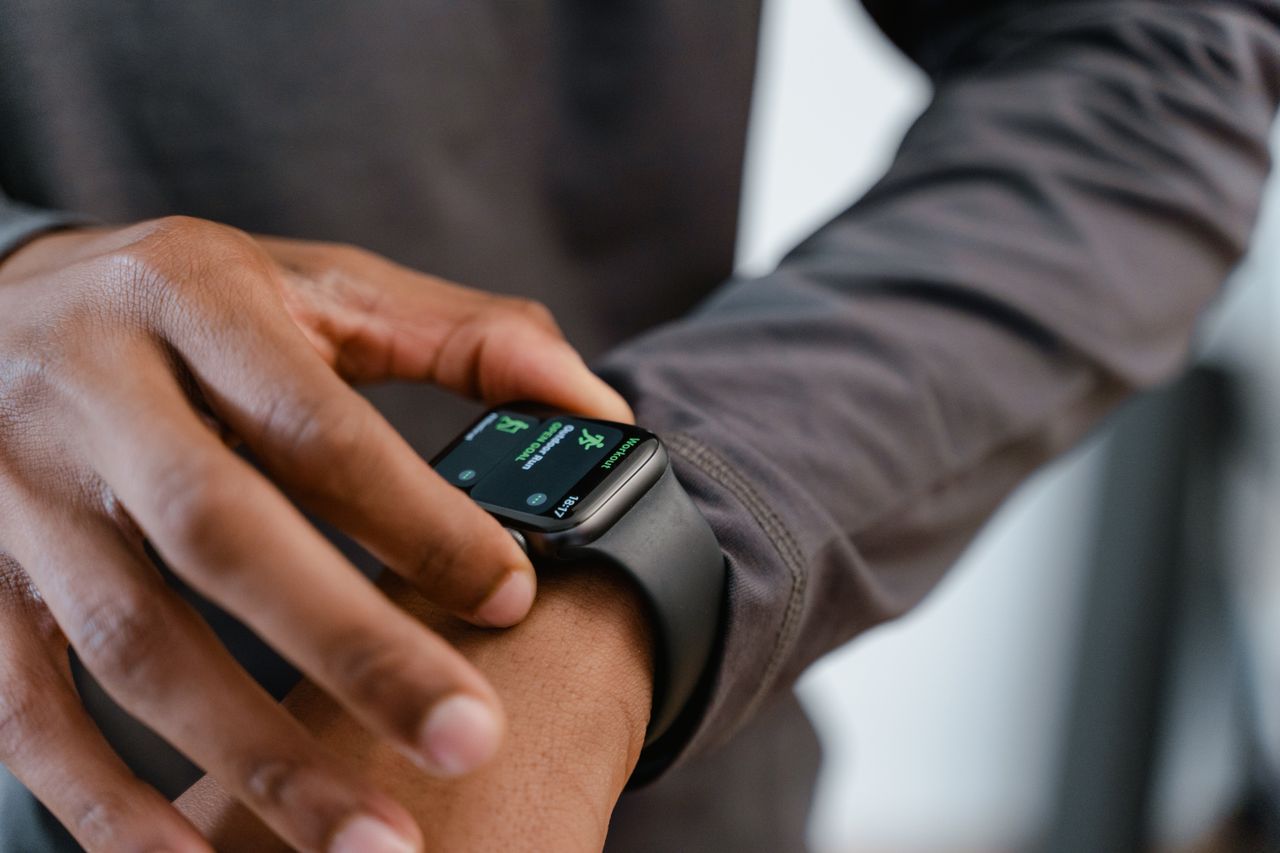
Every one of these products is sold with the same pitch: better measurement, better outcomes. It’s the identical logic that sells wearables to adults and engagement dashboards to marketing departments. Technology didn’t invent institutional measurement. It industrialized it, the same way refrigeration and advertising didn’t invent hunger; they just made it profitable to exploit at scale.
Consider the streak. A student logs in, answers a set of questions correctly, and earns a small animated flourish plus a number that climbs the longer they keep showing up. It is, mechanically, the identical structure as a Fitbit activity ring, or a LinkedIn “profile strength” meter. The variable reward, the small dopamine ping, the faint anxiety of watching a number reset to zero: none of that is incidental. It’s the same behavioral architecture marketers have been refining for a century, and it works on eight-year-olds as well as adults. The scoreboard didn’t change shape. It just got younger.
From Report Card to Performance Review
Here is where the pattern stops being about children at all, because eventually children evolve from being students at school to adults at work.
The honor roll becomes the stack-ranked performance review. The gold star becomes a LinkedIn endorsement. Attendance becomes a productivity dashboard tracking keystrokes and hours logged. Standardized testing becomes the quarterly KPI, the OKR, the engagement score a manager has to explain to their own manager.
Somewhere between the fourth-grade spelling test and the annual review, most people stop asking themselves “what did I learn?” and start asking “how did I score?”, and by the time that swap happens, it feels less like a loss and more like maturity.
The reflex, the instinct to translate a complicated human effort into a single comparable number and then quietly let that number stand in for the effort itself, gets built early, reinforced for roughly eighteen years, and then handed a badge and a salary. By the time an adult sits across from a manager hearing about their “performance rating,” the emotional wiring is already decades old.
The workplace didn’t teach anyone to fear the number. It just recognized a fear that was already fully trained and put it to work. Somewhere along the way, the measurement stopped describing the work and started defining the person doing it.
What Happens When the Test Gets Automated
There’s a newer wrinkle worth naming, and it’s tempting to make it about AI directly, but the more interesting question isn’t whether students should be allowed to use it. It’s what the arrival of a tool that can produce a passable essay in nine seconds reveals about what schools were actually measuring in the first place. If a chatbot can produce the artifact a grade was built to reward, then the grade was never really measuring understanding. It was measuring the production of an artifact that resembled understanding closely enough to pass. That’s not a crisis invented by artificial intelligence. It’s a crack that was already there, now visible under slightly brighter light.
AI isn’t exposing a failure of education. It’s exposing a failure of proxies. Whenever an institution confuses the artifact for the ability, the essay for the understanding, the badge for the skill, the score for the effort, automation eventually finds the shortcut first.
The Middle Path, As Usual
None of this is an argument for abolishing grades, deleting the gradebook, or pretending that measurement itself is the enemy. Standards matter. Feedback matters. A teacher who can’t tell a strong essay from a weak one isn’t doing anyone a favor by refusing to say so. The problem isn’t schools measuring students. The problem is what happens quietly, over years, when the measurement stops serving the learning and starts replacing it as the thing being pursued.
That’s the same conclusion this kind of story always arrives at, whether the subject is beer, dating apps, or gradebooks. The instinct being exploited is never invented by the system exploiting it. It’s ancient, ordinary, and human: the desire to know where you stand, to be told clearly that the effort counted. Marketers didn’t invent hunger. Dating apps didn’t invent loneliness. And school didn’t invent the desire to be measured well. It just got there first, and it had eighteen years, several hours a day, to make sure the habit stuck.
So the next time someone mentions feeling anxious about a performance review, or catches themselves refreshing an engagement dashboard the way they used to refresh a grade portal, it’s worth asking where that particular reflex was actually built. Not Fitbit. Not LinkedIn. Not even the first performance review.
The first dashboard wasn’t on anyone’s phone. It sat in a backpack, next to the pencil case, years before anyone thought to call it one. We learned to read report cards long before we learned to question them.
Related Posts