
How did sunscreen evolve from a simple health product into a symbol of identity? From baby oil to glitter sunscreen, discover how sunscreen has evolved and what that reveals about marketing and consumers.
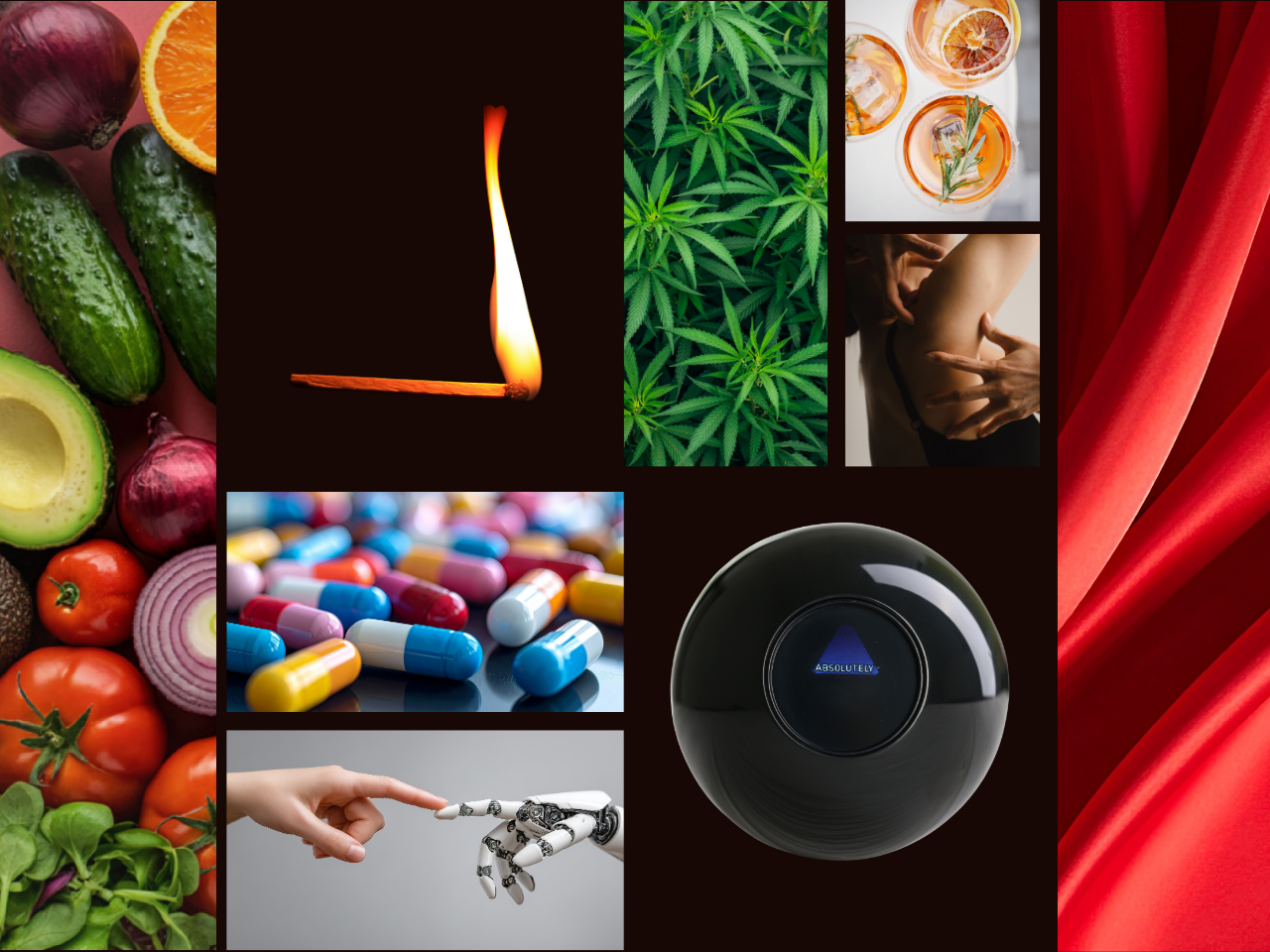
Some of you have been on this ride with me for a long time, so you already know I’m not shy about calling my shots. Still, I’m guessing a few of you didn’t have this on your bingo card: FADS Marketing: Food, Alcohol, Drugs, Sex, and the New Marketing World Order.
When it was published in 2018, the book wasn’t just a snapshot of cultural trends. It was a set of predictions based on the fact that “FADS” don’t actually die. They get cleaned up, softened, datafied, and scaled until they feel inevitable.
The one thing I absolutely didn’t predict was 2020. None of us did.
COVID didn’t just disrupt marketing. It re-sequenced it. Lockdowns, supply chain chaos, remote everything, and the normalization of digital intimacy rewired how we eat, drink, medicate, connect and cope. If we ever feel like reopening that file (debatable), that’s probably a book of its own.
But that’s not today’s assignment.
Today is simpler—and honestly, more useful: what did I get right, what did I miss, and what evolved into something bigger than what I originally described?
Let’s go chapter by chapter.
Side note: if you need a refresher on the book, it’s on Amazon. The audio version slaps.
FADS Marketing Chapter 1: Food
Moderation didn’t return. Brands rebuilt the defaults.
Prediction (2018): Consumers won’t “relearn” instinctive portion control; the market will compensate by offering smaller choices, behavioral nudges, and blended products designed to pull people away from extremes without asking them to change.
What held
Portion/format “nudges” became normal. We now have all the mini-cans, single-serve packs, snackable everything framed as choice but functioning as quiet control.
Blended protein moved from a novelty to its own category. Mushroom-meat hybrids, half-meat patties, plant-forward menus, the middle path showed up exactly where predicted. Even early examples held, Sonic’s beef-and-mushroom burger wasn’t a fluke. It was a signal.
How the system optimized it
The “middle path” widened. Fully plant-based meat lost its straight-line hype curve, while hybrids proved stickier. Meanwhile, the data layer got sharper with loyalty apps, retail media, precision promos. The system didn’t just find moderation, it optimized it. The win wasn’t better choices, it was fewer decisions.
And GLP-1s? Oh, that conversation is just getting warmed up.
Marketing takeaway: If your strategy assumes consumers will self-regulate, you’re designing for fantasy. The winners design the defaults.
FADS Marketing Chapter 2: Alcohol
No/low stopped being a niche and became a structural lane.
The prediction (2018): A “moderation middle” would form around better-tasting non-alcoholic beer, cocktails, and spirits with retail normalization and more collaboration with social-safety organizations like MADD.
What stuck
No/low alcohol is now a mainstream growth segment. Legacy brands are launching NA flagships. Retail normalized it. Bars made space for it.
This isn’t abstinence. It is continuity with sustained growth forecasts.
How ritual survived
“Dry January” and “Sober October” turned into year-round sober-curious culture. Premium positioning replaced apology branding. And in some cases, moderation didn’t mean less intoxication. It meant different intoxication.
Enter hemp-derived THC drinks. Same ritual. Different chemistry.
My early expectation of a “MADD co-branded product wave” didn’t fully materialize, but the collaboration logic did. It just showed up as wellness language, values signaling, and harm-reduction aesthetics instead.
Marketing takeaway: Don’t sell “less.” Sell intact. Keep the ritual. Remove the penalty.
FADS Marketing Chapter 3: Drugs
Legalization advanced—then regulation split the “middle” into three markets.
The prediction (2018): Cannabis and hemp would carve out a legal middle ground between prescription and illicit markets.
What fractured
Hemp legalization arrived immediately. CBD went mainstream. Cannabis continued its slow, state-by-state march into legitimacy. A substance once synonymous with Reefer Madness, criminality, and social collapse was reintroduced as functional, therapeutic, and responsibly dosed.
What was once demonized is now tracked and forecasted.
What replaced the middle
Regulations lagged and CBD stayed messy. Some cannabinoids (delta-8, THCA) exploded into a loophole economy, then triggered crackdowns.
The “middle” didn’t stabilize, it fragmented.
Instead of one new lane, we now have three: regulated state cannabis, federally legal hemp/CBD, and contested intoxicating hemp derivatives.
The book’s prediction the “US becomes biggest cannabis exporter” stalled on federal legality and trade reality.
“Plant-based medicine” messaging didn’t disappear, it got wrapped in compliance, testing, potency limits, and enforcement. The romance faded. The paperwork arrived.
Marketing takeaway: In unstable regulatory categories, your go-to-market isn’t a launch plan. It’s a compliance strategy with brand aesthetics.
FADS Marketing Chapter 4: Sex
Normalization happened. The bigger story became trust, consent, and synthetic risk.
The prediction (2018): Sexual wellness would move beyond mechanics and performance and toward education, communication, inclusivity, and shared pleasure. Data and digital access would accelerate that shift.
What normalized
Normalization moved fast. Sexual wellness became easier to buy, easier to talk about, and easier to integrate into mainstream retail and e-commerce. Big brands and even celebrities entered the category. Inclusive language and spectrum-based design stopped being niche signals and became table stakes.
Where risk entered
Data and AI did not simply improve product-market fit. They introduced new forms of risk. Deepfakes, non-consensual imagery, and surveillance anxiety became part of the same ecosystem that promised empowerment and connection.
Sexbots did not replace human relationships, but AI companionship and synthetic intimacy forced new ethical conversations. The real disruption was not fantasy. It was trust.
Aging and disability intimacy services expanded more slowly and unevenly than predicted, but visibility increased. The direction held, even as policy and funding lagged behind cultural acceptance.
Marketing takeaway: If you sell anything adjacent to intimacy, you’re not just selling desire. You are selling the systems people rely on to feel safe, respected, and in control.
Epilogue: AI didn’t “arrive.” It embedded.
The prediction (2018): AI would quietly underpin everything. Marketing would adopt it aggressively. Transparency rules would follow. AI would both amplify compulsive behavior and help identify or interrupt it.
What embedded
AI adoption in marketing is now standard operating procedure. Personalization, content production, targeting, and automation are no longer experimental. They are assumed.
Transparency regulation arrived as predicted. California’s SB 1001 requires disclosure in certain commercial and political contexts. Broader governance followed, with the EU AI Act introducing new accountability and transparency obligations for general-purpose AI systems.
The darker consequences aged exactly as expected. Impersonation, deepfakes, and synthetic deception are no longer edge cases. They are central policy and platform concerns.
What followed
AI in marketing shifted from recommendation engines to generative systems everywhere. Creation, targeting, customer interaction, and synthetic agents now operate at scale.
The idea of driverless cars as ad platforms remains emergent rather than dominant, but the attention layer is already being negotiated. In-vehicle screens, autonomous fleets, and mobility data are actively being positioned for monetization.
The prediction that AI would both trigger and mitigate binge behavior now mirrors the broader engagement economy. Algorithmic systems drive compulsion through feeds and personalization, while parallel systems attempt detection, moderation, and intervention inside health care, insurance, and platform governance.
Marketing takeaway: AI is not a tactic. It is the environment. The competitive advantage is not using it faster, but using it without eroding trust.
The pattern underneath all of it
The strongest predictions in FADS Marketing were never about products. They were about behavior.
Across food, alcohol, drugs, sex, and AI, the future did not arrive louder. It arrived smoother. Smaller. Easier to accept and harder to refuse.
What won was not extremity or rebellion, but convenience. Defaults replaced decisions. Friction disappeared. Choice remained technically available, but increasingly unnecessary.
That is the real middle path. Not compromise, but compliance disguised as ease.
Next month, we take this forward with predictions for 2026, and what comes next when inevitability becomes the strategy.
Related Posts